

The choice of wheel size for mountain bikes has long been a contentious issue. Here in 2020, 29-inch wheels have become universally adopted across the entire spectrum of bike categories—from light-duty trail bikes to heavy-duty downhill rigs—while (mixed-wheel setups featuring a 29-inch front wheel and a 27.5-inch rear wheel) are also garnering increasing attention from manufacturers. What exactly do these ever-larger wheel diameters offer us, and what do we stand to lose?
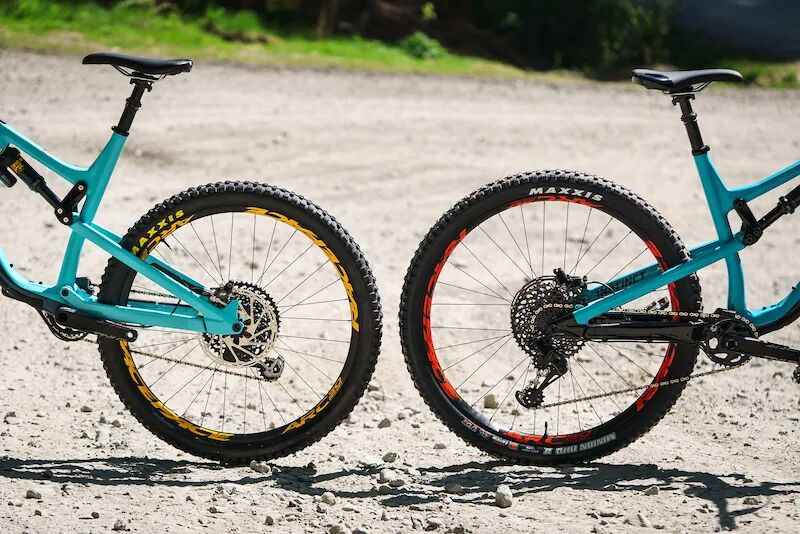
In 2014, bikes with 27.5-inch wheels became fully mainstream while the 26-inch standard gradually faded into decline; now, in 2020, it appears that 29-inch wheels are poised to repeat this historical trajectory. In the past, 29-inch wheels were ubiquitous primarily among XC models, with only a few manufacturers occasionally adopting them for certain Trail and AM bikes. As time went on, an increasing number of long-travel 29er mountain bikes hit the market, and by 2017, 29er downhill bikes had even made their debut on the World Cup circuit. Today, 27.5-inch models are almost entirely absent from the professional racing scene, and many manufacturers have consequently discontinued parts of their 27.5-inch product lines.
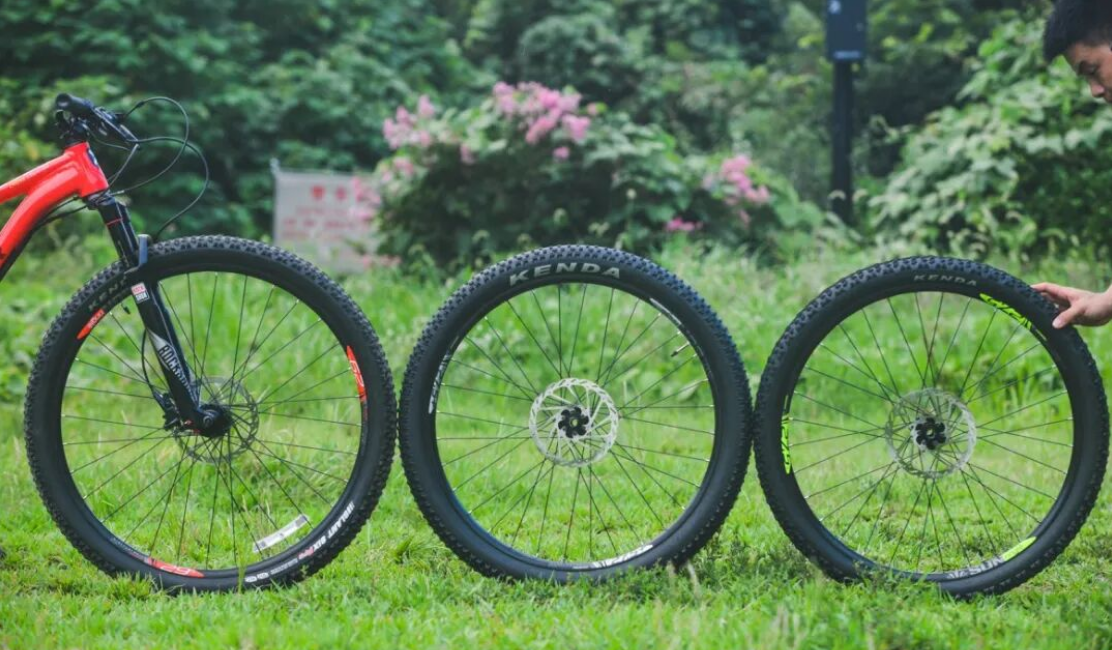
Let's first examine exactly what differences exist between 29ers and 27.5ers—differences significant enough to cause the 29er to gradually phase out the 27.5er.

1. Obstacle Clearance
Mountain bikes are designed to tackle trails filled with technical challenges; consequently, their ability to clear obstacles—or "clearance"—is a critical performance attribute. Wheel diameter is a key factor influencing this capability. Generally speaking, the larger the wheel diameter, the better the obstacle clearance. Before explaining why, however, I must introduce a specific concept: the "angle of attack." The angle of attack refers to the angle formed by the point where the wheel contacts an obstacle and the point where it touches the ground. The smaller this angle of attack, the better the obstacle clearance; since 29ers have a smaller angle of attack than 27.5ers, they possess superior clearance capabilities. How does this translate into the actual riding experience? It is quite simple: when encountering technical trail features such as rock gardens or exposed tree roots, you can navigate them with greater ease and composure.

2. Speed Retention and Acceleration Capabilities
This characteristic is determined by the weight distribution and rotational mass of the wheelset. The 27.5-inch wheelset (27.5er) offers superior acceleration capabilities but exhibits weaker speed retention; the 29-inch wheelset (29er) presents the opposite scenario—poorer acceleration but strong speed retention.
In the 27.5er wheelset, the weight of the tires, rims, and spokes is distributed closer to the wheel's central axis; furthermore, these components are relatively lighter in weight. Consequently, the 27.5er possesses lower rotational mass and achieves higher rates of acceleration—simply put, it delivers better acceleration performance—though, comparatively speaking, its ability to maintain speed is inferior.
The 29er operates in the reverse manner. This dynamic can be likened to the distinction between deep-section and shallow-section wheelsets on road bikes: the 27.5er corresponds to the shallow-section profile, while the 29er corresponds to the deep-section profile.

3. Handling
On this front, there is no doubt: the 27.5er is more agile, whereas the 29er feels slightly cumbersome—particularly when navigating tight, twisty sections of the trail.