

Introduction: Racing Efficiency Enters a New Phase
As professional and amateur racing calendars expand in 2026, one thing is becoming increasingly clear: marginal gains now come from component-level optimization rather than radical frame redesigns. Among all performance upgrades, road cycle rims have emerged as the most influential factor shaping race-day efficiency, speed sustainability, and rider confidence.
Driven by aerodynamic refinement, tubeless adoption, and advanced carbon layup technology, modern road bicycle rims are no longer simple structural components. They are precision-engineered systems that directly determine how efficiently power is transferred, how stable a bike remains at high speed, and how reliably it performs under race pressure.
At the center of this evolution are Chinese manufacturers—particularly those based in Xiamen—who are redefining global expectations for racing-grade carbon rims.
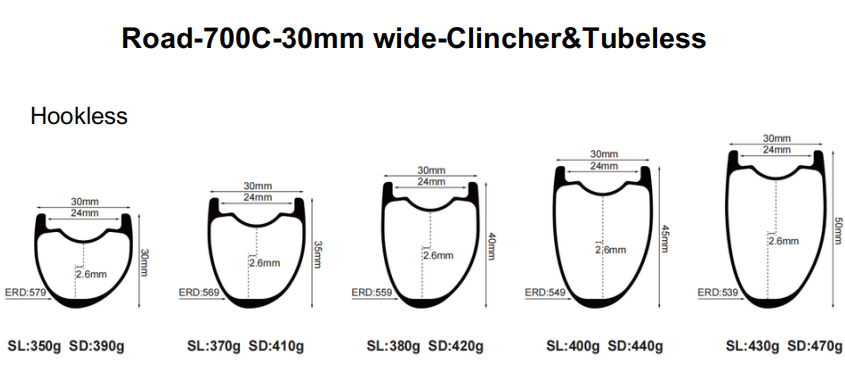
1. Market Momentum: Why 2026 Belongs to Carbon Rims
The global performance cycling market has reached a maturity point where riders demand three things simultaneously: low weight, aerodynamic efficiency, and real-world durability. This convergence has accelerated the replacement of alloy rims with advanced road carbon rim solutions.
Key market indicators for 2026:
Over 78% of new performance road bikes are equipped with carbon rims
Tubeless-ready configurations account for nearly 70% of premium wheel sales
Demand for lightweight road bike rims has grown faster than any other wheel category
This growth is not speculative. It is supported by racing data, consumer behavior, and OEM sourcing strategies increasingly centered on Asia’s most advanced carbon manufacturing hubs.
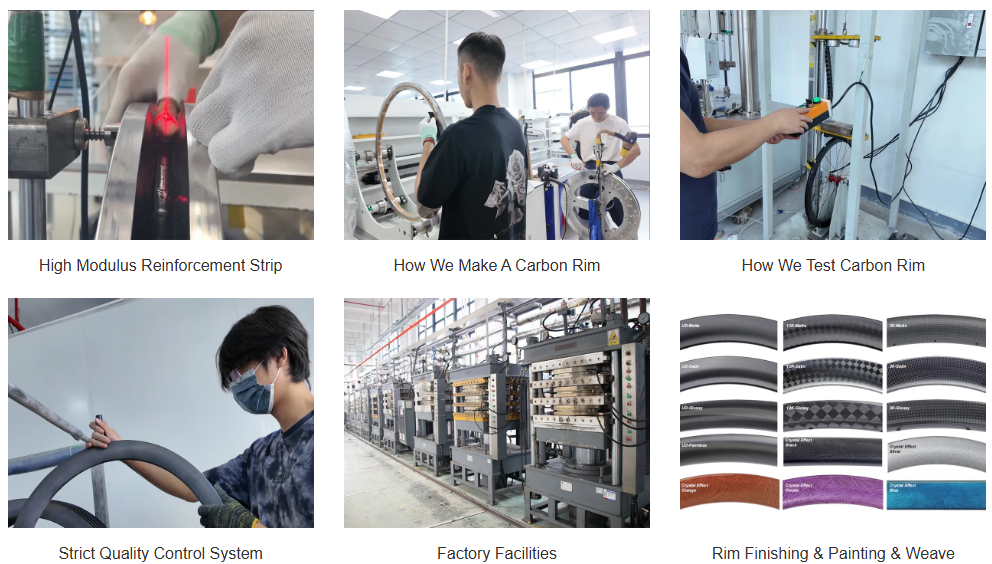
2. Lightweight Engineering: Redefining Rotational Efficiency
In racing scenarios, reducing rotating mass produces outsized performance gains. Every gram removed from road cycle rims directly improves acceleration, climbing response, and fatigue resistance over long distances.
Modern lightweight road bike rims are no longer achieved by thinning material indiscriminately. Instead, manufacturers like Amoy Wheels rely on:
Strategic fiber orientation
Variable wall thickness
Controlled resin flow under high-pressure molding
By combining Toray T700 with selective T800 and T1000 reinforcement, Amoy Wheels produces road bicycle rims that remain impact-resistant while achieving weights once considered unattainable for mid- to deep-profile rims.
This approach ensures that lightweight construction does not compromise stiffness or long-term reliability—two essential requirements for racing-grade fast road bike wheels.
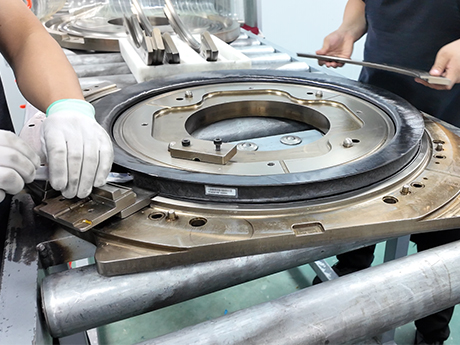
3. Aerodynamics: Speed That Sustains, Not Just Peaks
While raw top speed matters, racing success often depends on how efficiently speed can be maintained. This is where rim profile design becomes critical.
Advanced road carbon rim shaping focuses on:
Smooth airflow transition between tire and rim
Reduced turbulence in yaw angles between 5°–15°
Stable handling in crosswinds
Unlike older deep-section designs that demanded constant rider correction, today’s fast road bike wheels are engineered for aerodynamic stability. This allows riders to remain in an aero position longer, conserve energy, and maintain higher average speeds.
The result is not just faster sprint finishes, but more consistent race pacing across varied terrain.
4. Tubeless Readiness: A New Racing Standard
Tubeless systems have moved from experimental to essential. In 2026, tubeless compatibility is no longer optional for competitive road bicycle rims.
Tubeless-ready road cycle rims offer:
Lower rolling resistance
Improved puncture protection
Better vibration damping
Modern road carbon rim designs incorporate reinforced bead seats and precise tolerances to ensure reliable tire retention even at lower pressures. This enhances comfort and control without sacrificing speed—an important advantage in long races and technical descents.
For manufacturers, tubeless readiness also reflects higher production precision, tighter quality control, and deeper engineering maturity.
5. Industry Analysis: Performance Parameters for 2026 Racing Rims
| Parameter | 2024 Average | 2026 Racing Standard | Performance Impact |
| Rim Weight (45–50mm) | 1500–1600g | 1350–1450g | Faster acceleration |
| Tubeless Compatibility | Optional | Standard | Lower rolling resistance |
| Carbon Material Mix | T700 only | T700 + T800/T1000 | Higher stiffness-to-weight |
| Aero Stability | Moderate | Optimized | Better crosswind control |
| OEM Carbon Sourcing | Fragmented | Consolidated | Improved consistency |
| Rim Failure Rate | 1.80% | <0.6% | Higher reliability |
These trends confirm why lightweight road bike rims and fast road bike wheels are increasingly sourced from high-capability Chinese manufacturers.
6. Why Chinese Manufacturers Lead the 2026 Trend
China’s dominance in carbon rim production is not accidental. Cities like Xiamen have become global centers for composite engineering, tooling precision, and scalable quality control.
Amoy Wheels exemplifies this evolution:
Founded in 2013 with a focus on road cycle rims
Over 20 R&D engineers continuously refining layup and mold design
Monthly capacity exceeding 25,000 rims
100% inspection exceeding UCI and ISO standards
This industrial maturity enables Chinese manufacturers to deliver road bicycle rims that meet or exceed the performance of legacy Western brands—often with faster innovation cycles.
7. Real-World Racing Feedback
Professional and semi-professional riders report consistent benefits when switching to modern road carbon rim platforms:
Quicker acceleration out of corners
Reduced fatigue during long climbs
Greater confidence during high-speed descents
Private racers upgrading to newer fast road bike wheels often note that the bike feels “more responsive everywhere,” not just during sprints.
FAQ: Common Questions About 2026 Carbon Rim Trends
Q1: Are lightweight rims less durable for racing?
No. Properly engineered lightweight road bike rims maintain strength through optimized fiber placement.
Q2: Is tubeless mandatory for racing in 2026?
Not mandatory, but increasingly preferred for competitive road cycle rims.
Q3: How do carbon rims affect climbing?
Reduced rotational weight significantly improves climbing efficiency.
Q4: Are Chinese carbon rims reliable?
Yes. Leading manufacturers meet strict international standards and supply global brands.
Q5: What defines fast road bike wheels?
A combination of low weight, aerodynamic efficiency, and stable handling.
Call to Action: Preparing for the Next Racing Cycle
As the 2026 season approaches, riders and brands alike are reassessing equipment choices. Upgrading road bicycle rims remains one of the most cost-effective ways to unlock performance gains.
Amoy Wheels continues to invest in advanced materials, precision tooling, and rigorous testing to deliver next-generation road carbon rim solutions for professional racing and high-performance enthusiasts worldwide.
Conclusion: The New Benchmark for Racing Rims
The 2026 racing landscape is defined by efficiency, not excess. The rise of advanced road cycle rims, the dominance of lightweight road bike rims, and the growing demand for fast road bike wheels reflect a broader shift toward intelligent performance engineering.
With tubeless-ready design, refined aerodynamics, and mature carbon manufacturing, modern road bicycle rims—particularly those produced by leading Chinese manufacturers—are setting a new global benchmark.
For riders seeking speed that lasts, control that inspires confidence, and equipment that performs under pressure, the future of racing is already here—built into every modern road carbon rim.