
Since the Union Cycliste Internationale (UCI) authorized the use of disc brakes in competition in 2018, they have become increasingly prevalent in the road cycling sector. Today, from mountain bikes and gravel bikes to high-end road bikes, disc brakes have emerged as the standard configuration. Nevertheless, a significant number of cyclists—particularly road riders who prioritize lightweight construction and classic aesthetics—continue to opt for rim brakes.
It is worth noting that rim brake and disc brake systems are generally incompatible: frames designed for rim brakes cannot accommodate disc brakes, nor can disc brake wheelsets be used on rim-brake models. This implies that once a specific brake type is selected, switching to the other system at a reasonable cost is virtually impossible. Consequently, clearly defining your specific needs prior to purchasing a new bike or upgrading your current one is of paramount importance.
This article will provide as detailed a comparison as possible between rim brakes and disc brakes, with the aim of offering you a helpful reference point.
**Working Principle**
The fundamental difference between rim brakes and disc brakes lies in the location where the braking force is applied.
**Rim Brakes**
The brake calipers are mounted on the seatstays (rear upper forks) and the crown of the front fork; braking is achieved by the brake pads clamping down on the braking surfaces located on the sidewalls of the rim. The braking force is applied directly to the rim itself. Rim brakes feature a relatively large clearance between the pads and the rim, offering a high tolerance for installation; once properly adjusted, routine maintenance is simple, typically requiring only the replacement of worn brake pads or cables.
**Disc Brakes**
The brake calipers are mounted near the hub, where the brake pads clamp down on a metal brake rotor (disc) that is securely attached to the hub. The braking force is applied near the center of the wheelset, rather than to the rim.
Common Types
Main Types of Rim Brakes
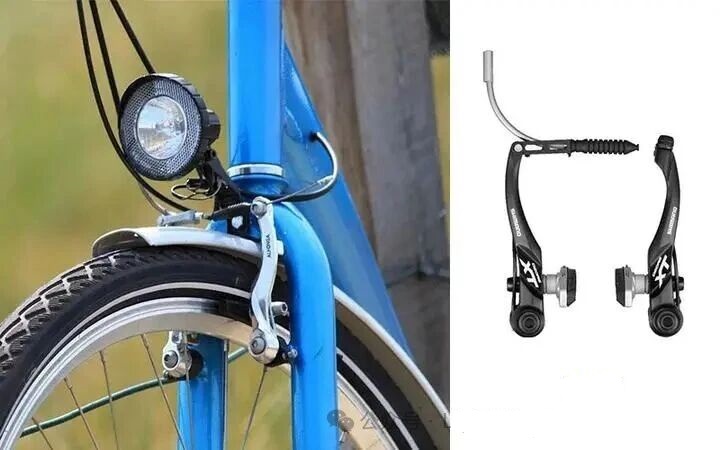
V-Brakes: Consist of two independent V-shaped brake arms that clamp down on the rim when pulled together by a cable.
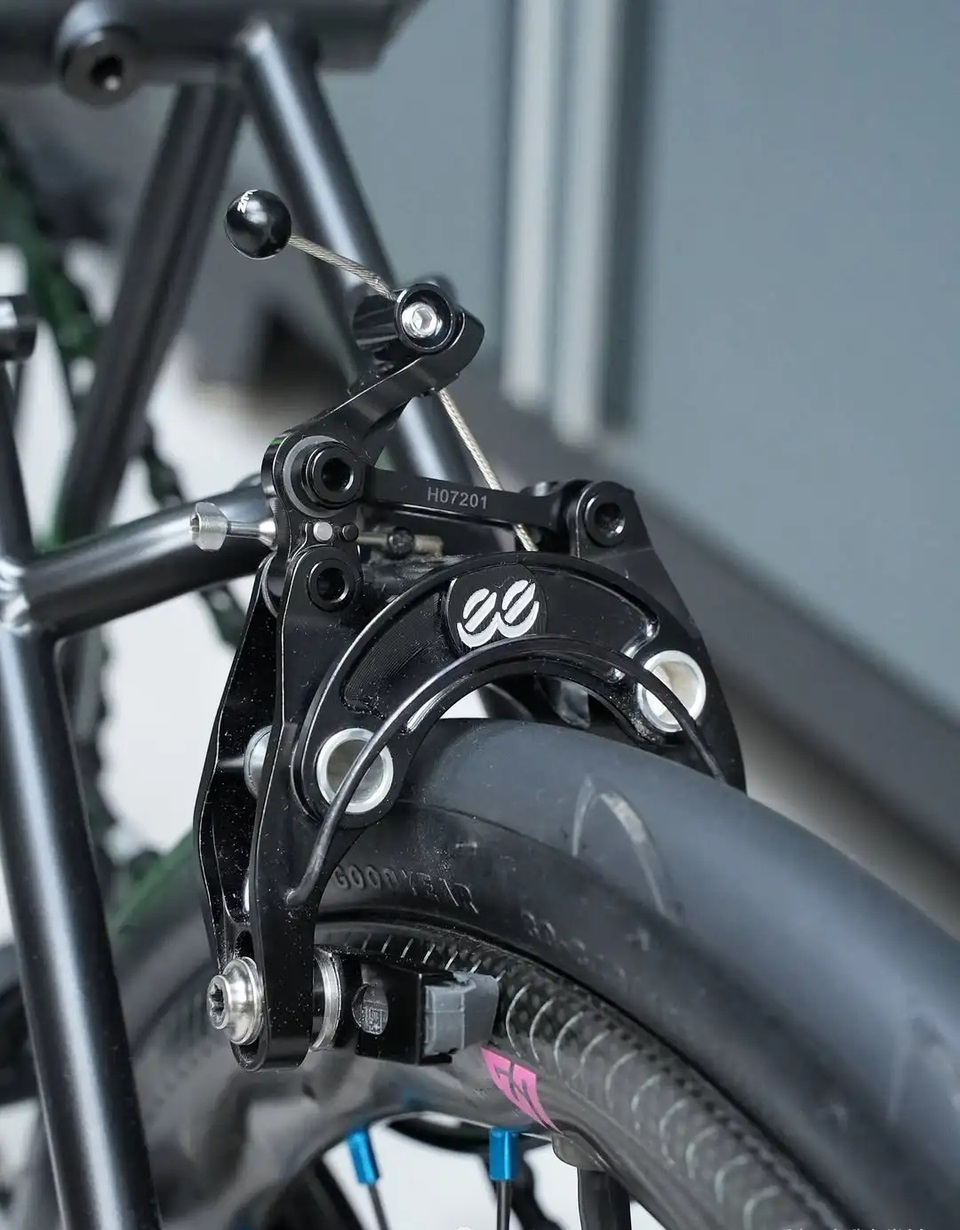
C-Brake: Composed of a C-shaped metal frame; when the brake cable is pulled, the brake pads on both sides clamp down onto the wheel rim.
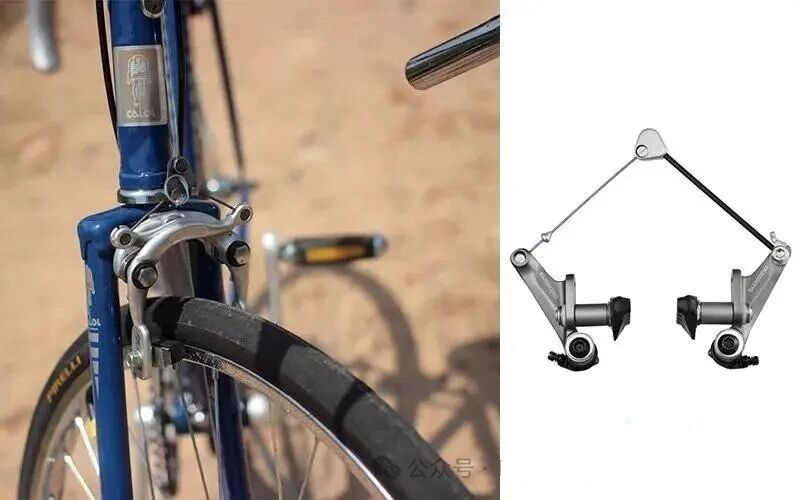
Cantilever Brakes: These brakes generate a lateral force against the frame via a cable yoke. This design eliminates the need for additional frame structures, resulting in a cleaner and lighter bicycle; however, it requires greater lever force to engage the brakes, which also leads to longer stopping distances. This system is currently being gradually phased out of the market and is now primarily found on entry-level bicycles. Early mountain biking enthusiasts should be quite familiar with it.
Main Types of Disc Brakes
Mechanical Brakes (Cable-Actuated): These transmit braking force to the caliper via a cable, allowing for the reuse of control components from an existing rim brake setup. Replacing brake cables is inexpensive, and maintenance is relatively simple. However, the tactile feel of mechanical brakes is inferior to that of hydraulic disc brakes.
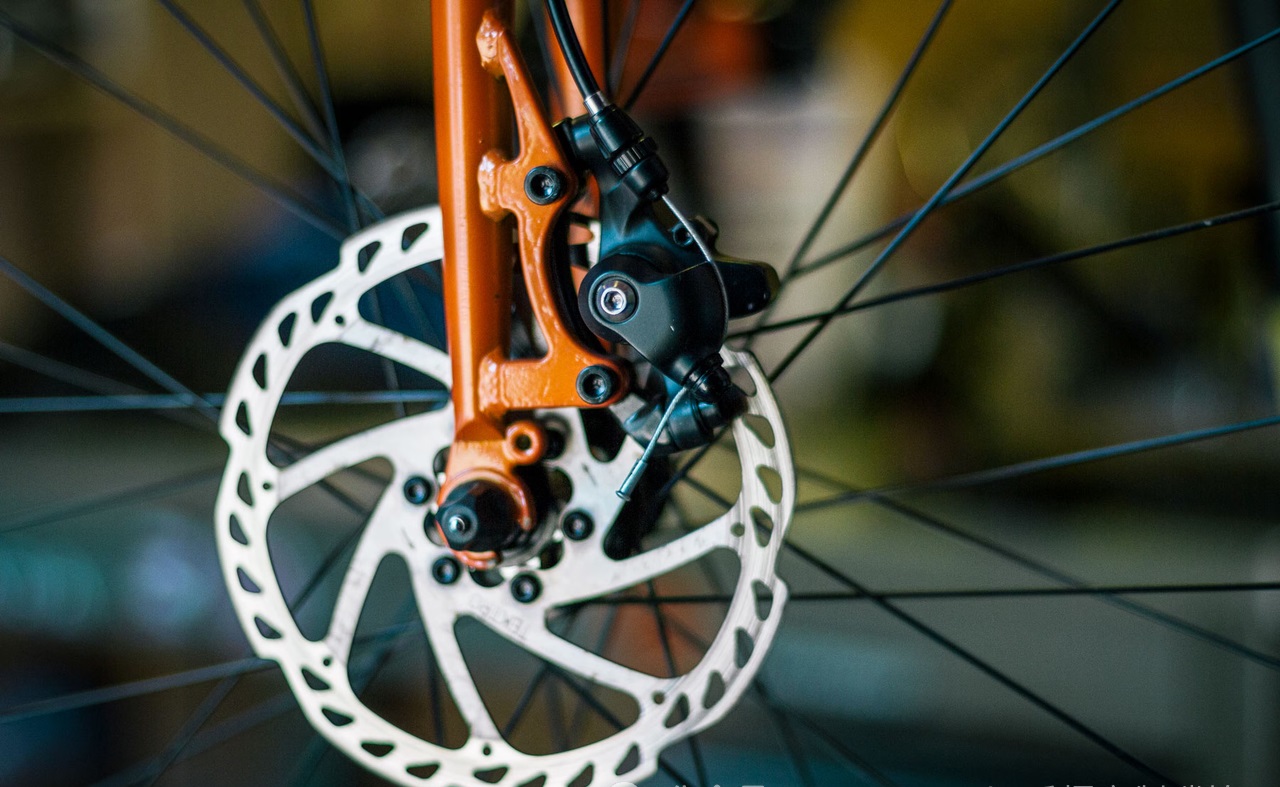
Hydraulic Disc Brakes: These systems transmit pressure through a sealed fluid circuit to actuate the brakes. Free from mechanical friction, they deliver superior stopping power and offer a more refined feel. Some hydraulic disc brakes feature a design that automatically compensates for brake pad wear, meaning that manual adjustment of the pad clearance is rarely required during routine use.
Disc Brakes
Advantages of Disc Brakes
**Powerful Stopping Power:** Braking performance far exceeds that of rim brakes, providing ample confidence—especially during steep descents or on wet, muddy surfaces.
**All-Weather Performance:** Braking performance remains virtually unaffected by rain, offering a stable and reliable stopping experience.
**Effortless and Efficient:** Generates powerful stopping force with minimal hand effort, making it ideal for riders with less arm strength or for long descents.
**Superior Heat Dissipation and Durability:** The independent brake rotor features a large surface area exposed to the air, allowing it to better resist heat fade. Since the braking process does not wear down the rim, the overall lifespan of the wheelset is extended.
**Tire Compatibility:** Eliminates the need to mount brake calipers directly onto the rim, thereby creating space for wider wheels and tires.
**Selectable Rotor Sizes:** Braking power can be adjusted by swapping rotors of different sizes; generally, a larger rotor provides stronger stopping power.
**No Rim Wear:** Braking-induced wear is concentrated on the replaceable rotor, significantly extending the lifespan of the rim.
Disadvantages of Disc Brakes
The complete disc brake system is typically several hundred grams heavier than a rim brake system.
Higher cost, particularly for hydraulic disc brakes.
**Potential for Rotor Rub:** If the brake rotor becomes warped or slightly misaligned, it may cause friction and audible noise, requiring re-adjustment.
Maintenance and repair of disc brake systems—especially hydraulic ones—typically require a higher level of technical expertise.
Rim Brakes
Advantages of Rim Brakes
Lighter Weight: By eliminating brake rotors, heavier hubs, and other components, they are the preferred choice for weight-conscious cyclists.
Simple Maintenance: Users can easily perform tasks such as replacing brake pads and adjusting cables.
Lower Cost: Entry-level bicycles equipped with rim brakes typically have a lower price point, and spare parts are widely available.
Disadvantages of Rim Brakes
Rim Wear: Over prolonged use, the rim sidewalls thin out or even develop grooves; in severe cases, the entire wheelset must be replaced.
Drastic Performance Drop in Adverse Weather: Rain coats the braking surface, significantly compromising braking performance.
Limited Stopping Power: Particularly at high speeds, during descents, or on wet surfaces, the braking distance is noticeably longer than that of disc brakes.
Sensitivity to Rim Trueness: If the rim is out of true (laterally or radially), noticeable vibration will be felt during braking.
Tire Width Limitations: The design of the brake calipers restricts the maximum width of the rims and tires that can be installed.
Amoy Wheels Custom Rim Brake Track Upgrade – Amoy Wheels
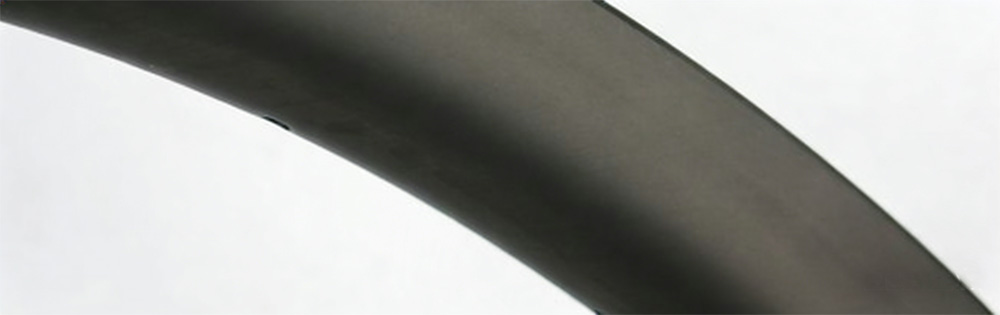
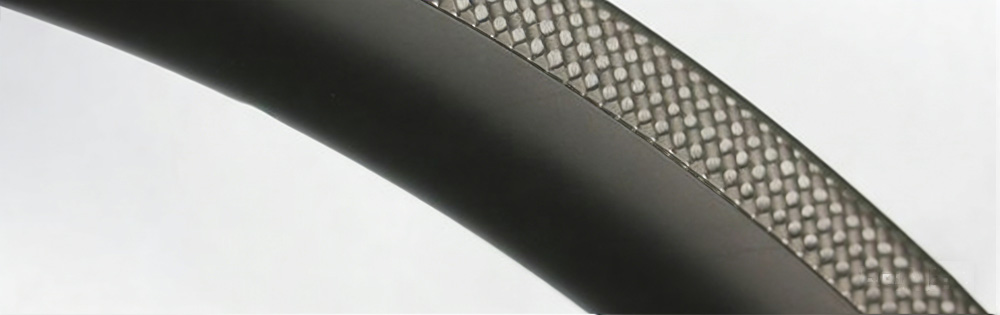
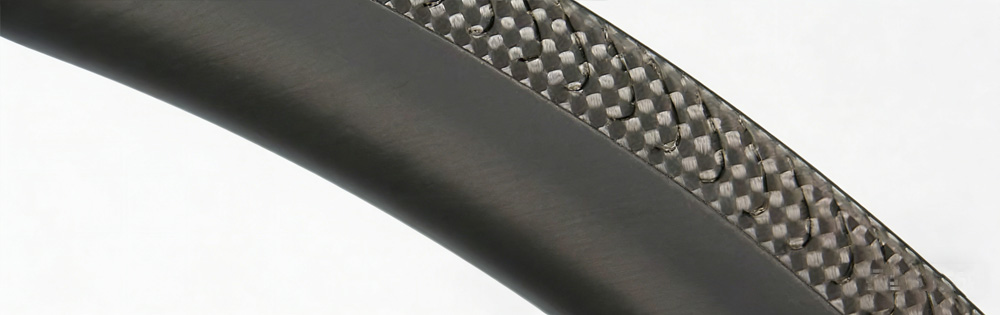
To address the inherent limitations of rim brakes—specifically regarding heat dissipation and braking performance on wet surfaces—we have implemented a technical upgrade. The brake tracks on our rim-brake rims now incorporate graphene material, which facilitates rapid heat dissipation during continuous braking, thereby ensuring consistent and stable braking performance. According to our rigorous testing, this graphene-enhanced brake surface can withstand frictional temperatures of up to 250°C without deformation. The upgraded brake track features a grooved surface design; in wet conditions, these grooves help channel away residual water trapped between the brake pads and the rim, while in dry conditions, they generate increased friction—ultimately reducing the braking force required.